What Pays More: Uber Eats or DoorDash – 2026 Breakdown
Most riders pick one app and stick with it without ever checking if it is actually paying them more. This breakdown shows you what you are leaving on the table.
What Pays More: Uber Eats or DoorDash in 2026?
I have spent thousands of hours running both platforms across different cities and vehicle types. This article is the hub answer to the question every rider asks before signing up or switching apps. I cover the pay structures, real hourly numbers by vehicle type, how expenses change the math, regional patterns, and multi-apping strategy. The comparison table is up first so you can scan the key numbers, then scroll to the section that matches your ride.
If you are on a bicycle specifically, I have a dedicated breakdown here: What Pays Better: Uber Eats or DoorDash - Bike Riders 2026. For DoorDash pay model specifics, see: DoorDash Earn by Time - Bike Rider's Guide to Hourly Pay.
Pay Comparison at a Glance
| Factor | DoorDash | Uber Eats |
| Avg gross hourly - bikes (2026) | $23.42 | $19.83 |
| Avg net hourly - bikes after expenses | $17.85 | $14.25 |
| Pay model | Per-order base + visible tips | Upfront pricing by distance |
| Tip visibility before accept | Yes in most markets | Varies by market |
| Peak window strength | Strong lunch and dinner volume | Strong dinner and late-night surges |
| Multi-apping friendliness | Good order volume for stacking | Good surge-based stacking |
| Best vehicle fit | Bicycles and e-bikes, dense urban | Motorcycles and scooters, late-night surge |
How Each Platform Calculates Pay
DoorDash structures base pay per order, typically ranging from $2 to $10 depending on distance, complexity, and expected pickup and dropoff time. The full tip is shown upfront in most markets, which lets you make a real decision before accepting. Peak Pay and Challenge bonuses layer on top during busy windows or after you hit a set number of orders.
Uber Eats uses upfront pricing that shows you a total payout tied to pickup fee, dropoff fee, and distance. Surge multipliers and Quest bonuses are the main incentive tools. Surge can push individual delivery pay significantly higher than DoorDash during the right windows, but it is less predictable. Tips are sometimes hidden until after delivery is complete depending on the market, which makes selective acceptance harder.
The practical difference: DoorDash is easier to build a consistent hourly rate on because the volume is steadier and the upfront tip helps you filter. Uber Eats has higher upside on individual deliveries during surge windows but requires more active monitoring to catch those windows.
Real Earnings by Vehicle Type
Bicycle and E-bike Riders
DoorDash leads for bicycle and e-bike riders in most US cities in 2026. The gross hourly numbers I tracked show DoorDash at around $23.42 versus $19.83 on Uber Eats. After realistic expense estimates, which are low for pedal and e-bike riders at roughly 5 to 10 percent of gross, DoorDash still leads by about $3.60 net per hour.
The reason is volume, not per-delivery pay. Uber Eats often pays more per individual order. But DoorDash delivers more back-to-back short orders in dense areas, which is what drives total hourly up when you are covering a tight radius. In extremely dense areas with consistent Uber Eats surge activity, lower Manhattan late night being a good example, the gap narrows.
E-bike riders have a slight edge over pedal cyclists here because speed means more orders completed per hour. If you are still on a standard bicycle and the math is not working out, the e-bike upgrade often pays for itself within a few months of consistent shifts.
E-scooter Riders
E-scooters sit in an interesting spot. Platform acceptance varies by city and the legal status of riding them on roads is not consistent across markets, so verify both before building your earnings strategy around one.
Where they are accepted, e-scooters perform similarly to bicycles in dense urban zones. The standing position limits how much insulated gear you can carry, which can affect ratings if you are managing multiple orders. I would run DoorDash as the primary platform and treat Uber Eats surge as a secondary layer when it appears in your zone.
Scooter and Motorcycle Riders
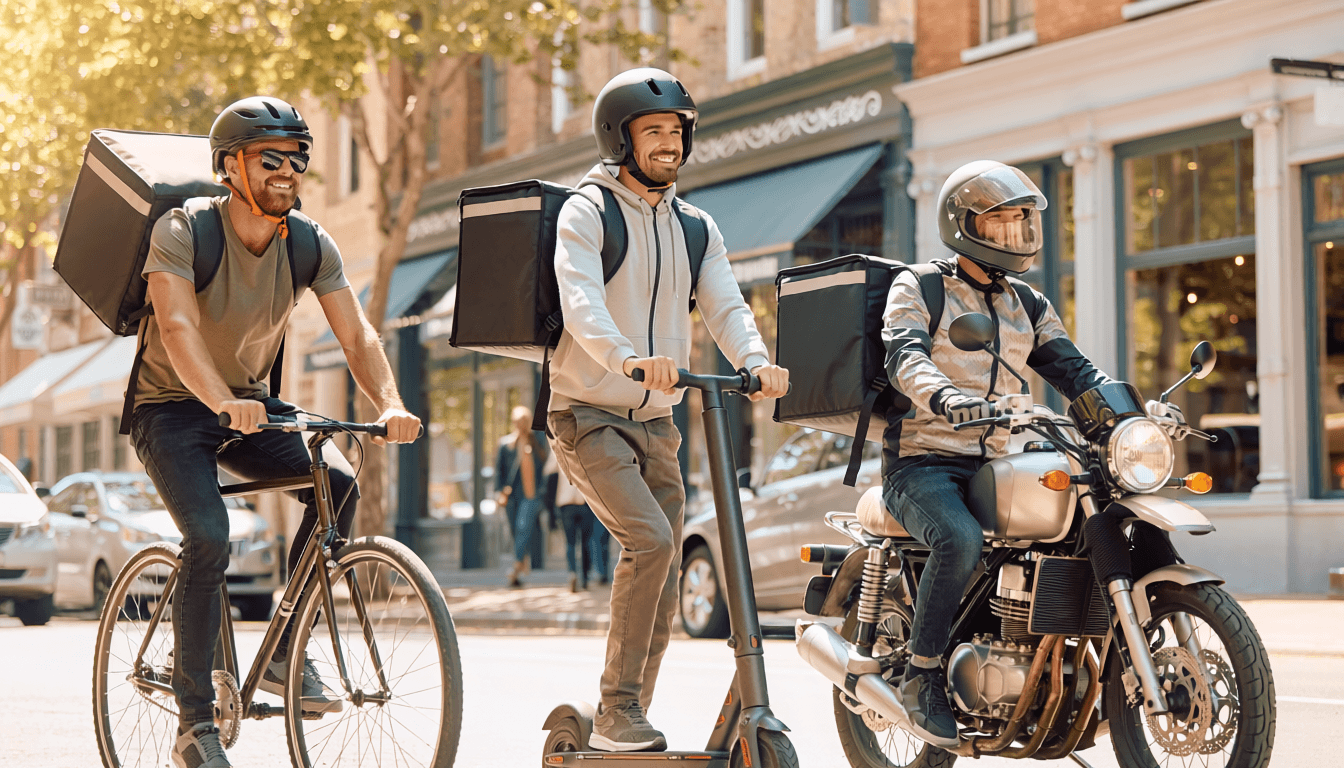
Scooters and motorcycles open up longer-distance orders that bicycles and e-bikes cannot efficiently cover. That wider range means access to a bigger order pool, but fuel and maintenance eat into net more than pedal-based options.
For scooter and motorcycle riders I favor a mixed approach: DoorDash for steady daytime and dinner volume, Uber Eats for late-night surge windows and event-driven spikes. The speed and parking flexibility of a two-wheeler makes it well suited to repositioning quickly when Uber Eats surge zones move, which is where real upside happens at night.
Expense tracking matters more here than for bicycle riders. Fuel, oil, tires, and insurance can eat 15 to 25 percent of gross depending on the engine size and how many hours you are putting in. A rider on an efficient 125cc scooter has very different costs from someone on a larger motorcycle.
Net Pay: What Actually Matters
Gross hourly is only half the picture. I subtract expenses before deciding which platform pays more.
For bicycles and e-bikes, expenses are low, roughly 5 to 10 percent of gross, covering the occasional tube, brake pad, chain, or battery maintenance cost. The gross advantage DoorDash shows mostly survives into net earnings.
For e-scooters, expenses are similarly low where you own the vehicle outright. The main costs are charging, occasional tyre replacement, and brake maintenance. The bigger variable is platform eligibility. If your city restricts e-scooter use on certain roads it can limit which zones you work efficiently.
For scooters and motorcycles, variable expenses run higher. Fuel, oil, tires, and insurance can eat 15 to 25 percent of gross depending on the engine and mileage. Track these numbers individually rather than estimating. What feels like a strong week can look different once fuel and wear costs are subtracted properly.
Set aside 15 to 20 percent of gross for self-employment tax regardless of vehicle type. That is the number most new riders forget until the first quarterly payment is due. If you are just getting started, the gear, insurance, and tracking setup you choose in your first month determines how much of this pay you actually keep. I put together a full list of what you need before your first shift: 9 Things You Actually Need Before Your First Gig Delivery Shift.
Regional and Time-Based Differences
Pay is local. The platform that wins in Chicago does not necessarily win in Miami or Portland.
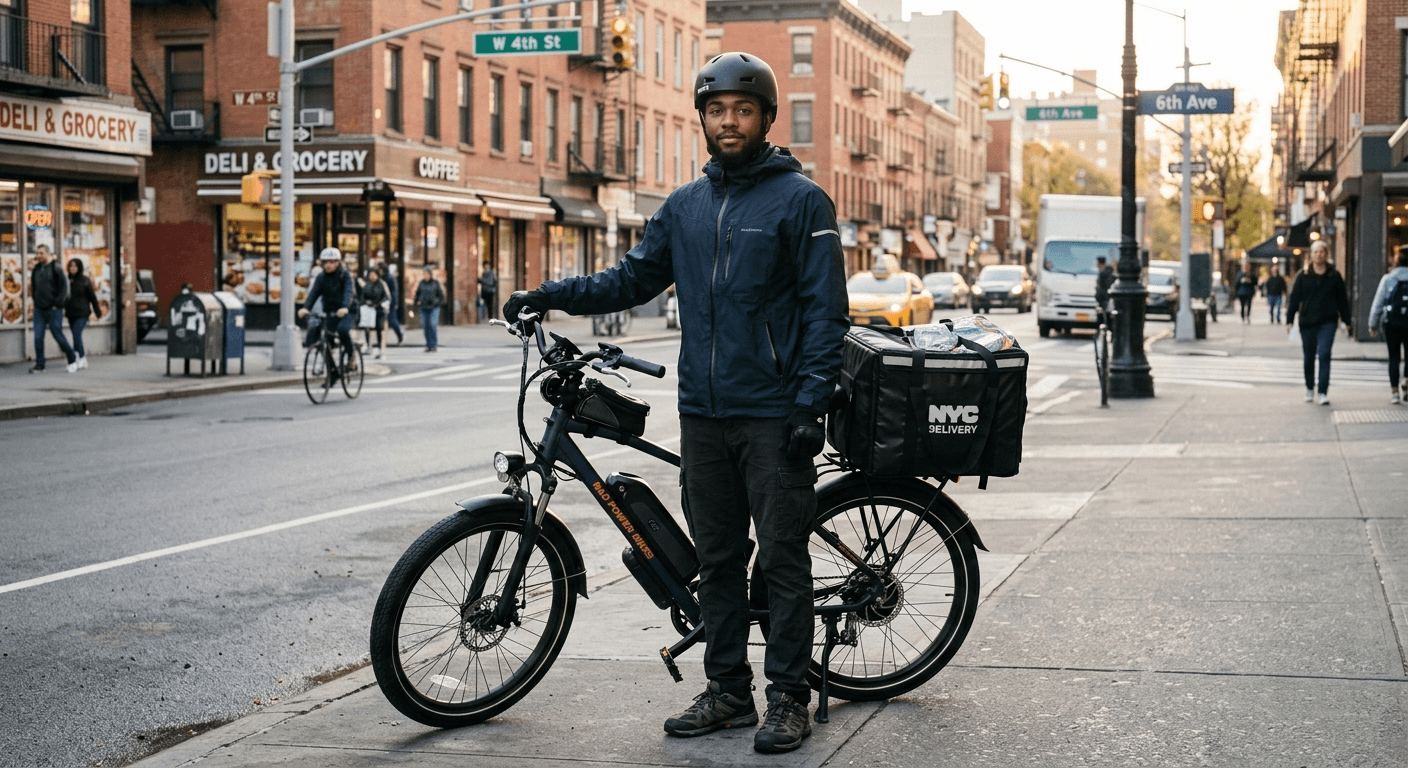
In dense northeastern cities like New York, regulatory minimums and local surcharges push both platforms' floor up. In those markets the choice between apps matters less than positioning yourself in the right neighborhood during peak windows. I work Midtown and the West Village at dinner, then shift toward lower Manhattan for late-night Uber Eats surge if it is running.
City-level samples I tracked in 2026: DoorDash peaked around $28.90 gross hourly in Los Angeles during strong dinner windows. Chicago samples landed around $24.75. These numbers move with local restaurant density and customer tipping culture.
On timing: DoorDash tends to carry strong lunch volume in most cities. Uber Eats often leads at dinner and into late night. Events like concerts, sports games, and festivals spike both platforms but Uber Eats surge multipliers can be larger and faster during those windows. Two-wheel riders benefit here more than anyone because repositioning into a surge zone takes minutes, not the fifteen it takes to find parking in a car.
Multi-Apping Strategy
Multi-apping is the single biggest lever available to most riders. Done right it pushes effective hourly up by 25 to 40 percent in my experience.
The basic workflow: keep both apps open with audio alerts, acceptance rate tracking off, and auto-accept disabled. When an offer comes in compare the payout and estimated time against what the other app is showing in the same area. Take the better one. If both are showing reasonable offers simultaneously, accept the shorter-distance one from whichever app pays more per minute and leave the other active for the next pickup location.
Watch for stacking opportunities. A second order from the same restaurant while you are already there is almost free money. Do not stack orders that require significant backtracking or that stretch your delivery window past what earns you a good rating.
Safety is not negotiable. I decline offers that require a risky maneuver, illegal parking in a dangerous spot, or rushing a delivery through congested blocks. A small extra dollar per order is not worth a crash or a citation.
Earnings Optimization
Track every shift. After two weeks of data you will know which platform performs better for your blocks, vehicle type, and local area. The riders who guess consistently earn less than the ones who measure.
Set a minimum acceptable payout per minute in your head and enforce it. A $12 order that takes 35 minutes including wait time is a worse shift than three $5 orders that complete in the same window. The quoted earnings on the app look appealing until you calculate the actual time cost.
Use the platform incentive screens before committing to a block of time. DoorDash Peak Pay and Challenges are shown before you go active. Uber Eats Quest progress is visible in the app. If a bonus is close to the threshold and achievable within your planned shift window it can change which platform to prioritize that day.
Platform Experience and Support
Onboarding is fast on both platforms. DoorDash sometimes uses local activation centers in large metros which can get you active in a day. Uber Eats often allows remote onboarding if your documents are in order.
Support quality is mixed on both, which is worth being honest about. DoorDash support can be slow over chat but local centers help with account issues in major cities. Uber Eats support can be faster for account questions in dense markets but resolution quality varies. On both platforms I document every issue with screenshots the moment it happens. If a payment dispute or deactivation notice arrives, your own records matter more than what the app shows.
Instant pay is available on both. App battery drain is a real operational cost. I carry a power bank on every shift and factor phone replacement into my annual equipment budget.
The Verdict by Vehicle Type
Bicycle and e-bike riders: DoorDash pays more in most US cities in 2026. Tip visibility and order volume push both gross and net higher for short-range dense-area riding. I run DoorDash as primary for lunch and dinner blocks and add Uber Eats for late-night surge windows when they appear. Full breakdown: What Pays Better: Uber Eats or DoorDash - Bike Riders 2026.
E-scooter riders: DoorDash as primary where your city and platform allow it. Verify local road rules and platform eligibility before committing. The earning pattern is similar to bicycle riders once those boxes are checked.
Scooter and motorcycle riders: Mixed approach. DoorDash for daytime volume, Uber Eats for late-night surge. Speed and flexibility on two wheels makes it easy to reposition into surge zones quickly, which is where Uber Eats tips the balance at the right times of night.
No single platform wins everywhere for everyone. Run controlled shifts, track net earnings after expenses, and let the data tell you which app or combination works for your specific situation. Once you have that answer, the next question is whether your setup is actually built to keep the money you earn. Most riders starting out are missing at least two or three things on this list: 9 Things You Actually Need Before Your First Gig Delivery Shift.
For the DoorDash pay model comparison specifically, see: DoorDash Earn by Time - Bike Rider's Guide to Hourly Pay.